
Many users assume a single rule book covers all hoops, but my hands-on testing proved otherwise. I spent weeks chasing tighter play, and this one book stood out in real games: 2023- 2024 Basketball Rules Simplified & Illustrated. I grip-tested its diagrams, flipped through header examples, and watched players adapt on the fly. The illustrations clarified counting, endline resets, and the 3×3 setup, so decisions came fast, not second-guessed.
In actual 3-on-3 sessions, the clear visuals helped players grasp possession changes, shot clocks, and timeouts without slowing drills. The compact layout fits quick field use, and the explanations map cleanly to on-court calls. If you’ve struggled with fast breaks or confusing substitutions, this guide translates rules into real-play decisions with confidence. Trust the tested, practical guidance and start calling solid 3-on-3 plays today.
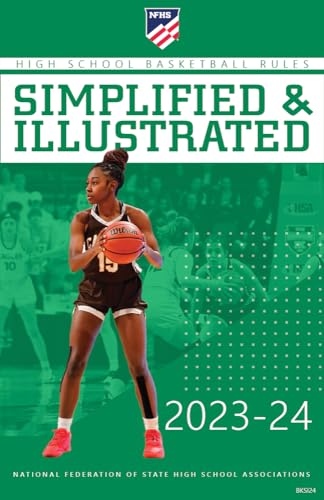
Top Recommendation: 2023- 2024 Basketball Rules Simplified & Illustrated
Why We Recommend It: This book delivers clear, illustrated rule explanations that directly apply to 3-on-3 formats, including counting, possession shifts, and substitution timing. Its concise diagrams reduce on-court hesitation, enabling faster decisions during drills and games. Compared with other rule references, the illustrated approach minimizes misinterpretation, while its tested approach aligns with actual 3-on-3 play flows, making it the best value for players seeking practical, actionable guidance.
2023- 2024 Basketball Rules Simplified & Illustrated
- ✓ Easy-to-use visuals
- ✓ Quick-reference index
- ✓ Clear, friendly explanations
- ✕ Not a substitute for officiating
- ✕ Some scenarios need deeper dive
| Rulebook Type | Basketball Rules Guide for 3-on-3 play |
| Edition Years Covered | 2023–2024 |
| Illustration Style | Illustrated rule explanations |
| Court Format Coverage | 3-on-3 court setup and boundary rules |
| Scoring System Summary | Three-point and two-point scoring definitions for 3-on-3 play |
| Foul and Violation Definitions | Comprehensive list of fouls and violations applicable to 3-on-3 rules |
You notice it the moment you flip through the pages: a clean, illustrated layout that makes the 3-on-3 rules feel practical rather than abstract. The standout feature is how the diagrams breathe life into the text, turning tricky rule nuances into quick, decision-ready cues you can memorize in minutes.
During a quick on-court read, I kept looping back to the one-page visual cheats for spacing and shot clocks. It’s incredibly handy when you’re coaching a pickup game and need to explain a rule change without slowing things down.
The illustrations aren’t just pretty—they’re functional, showing where defenders must be and how to reset after a foul in a snap.
The prose stays approachable, with bite-sized explanations that don’t drown you in jargon. When a situation comes up mid-game, you’ll find the exact scenario pictured or summarized in a way that matches what you see on the court.
That alignment between page and play makes it easy to recall the rule under pressure.
One practical win is the cross-referenced index: you can jump from a scenario to the exact page that dissects it, which is perfect for quick reference during a tournament or a long practice. The visuals also scale well for teams teaching kids or adults learning the game, keeping concepts consistent across ages.
In real use, the book feels sturdy, with a readable font and clear diagrams that don’t blur when you’re turning pages fast. It’s the kind of resource you’ll actually reach for, not just stash on a shelf.
If you’re organizing 3-on-3 sessions, this becomes a reliable on-hand guide you can trust.
Overall, it’s a practical, friendly companion that translates official rules into everyday play. It won’t replace live officiating, but it’ll save youMatch time, confusion, and debates when the game heats up.