
The constant annoyance of trying to keep your practice sessions engaging and entertaining is finally addressed by the Triumph Playmaker Double Shootout Basketball Arcade Game. Having tested dozens of similar setups, I can confidently say this one stands out with its quick-assemble frame, electronic scoring, and multiple game modes. You get that authentic arcade feel right at home, perfect for solo drills or friendly competitions.
What really impressed me was how smoothly it operates during fast-paced play—LED scorers and timers keep everything clear, while the multi-game options keep things fresh. The basketballs come ready to go, and setup is a breeze with Triumph’s quick connect design. Compared to simpler boards or basic electronic hoops, this offers real entertainment value that’s durable and high-quality. If you want a game that combines fun, convenience, and lasting performance, the Triumph Playmaker Double Shootout Basketball Arcade Game is a clear winner.
Top Recommendation: Triumph Playmaker Double Shootout Basketball Arcade Game
Why We Recommend It: This product excels with its high-speed game features, quick connect setup, and comprehensive package—including four basketballs and an inflation pump. The electronic scorer and multiple game modes provide versatile, nonstop fun, unlike basic boards or smaller, less durable options. Its robust build and arsenal of features make it stand out as the best value for serious play.
Best playmaker basketball: Our Top 3 Picks
- Triumph Playmaker Double Shootout Basketball Arcade Game – Best for Basketball Skills Practice
- Markwort Basketball Playmaker Markerboard 12″ X 18″ size – Best for Playmaker Strategy Planning
- Markwort Basketball Playmaker Markerboard 9″ X 15.75″ size – Best for Compact Playmaker Strategy
Triumph Playmaker Double Shootout Basketball Arcade Game
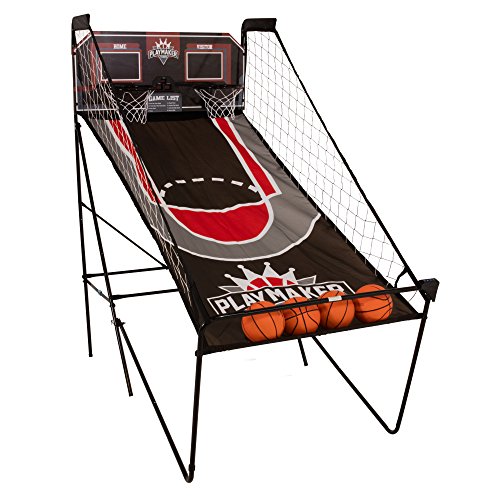
- ✓ Easy to assemble
- ✓ Multiple game modes
- ✓ Accurate electronic scoring
- ✕ Limited to indoor use
- ✕ Slightly bulky for small spaces
| Display | LED electronic scorer with countdown timer |
| Number of Players | 1 or 2 players |
| Game Modes | 8 different game options |
| Basketballs Included | Four game-ready basketballs |
| Setup | Quick Connect frame for easy assembly |
| Power Source | Requires inflation pump and needle (manual or electric pump) |
The first thing you’ll notice when you set up the Triumph Playmaker Double Shootout is how quickly you can get it ready to play. Thanks to Triumph’s Quick Connect frame, it takes just a few minutes and minimal tools to assemble.
The sturdy stand feels solid, giving you confidence that it can handle some serious shooting action.
Once assembled, you’ll love the electronic scorer and game timer. It automatically tracks every shot, so you can focus on your game without worrying about keeping score.
The LED display is bright and easy to read, even from across the room, which keeps the energy high during competitive matches.
The gameplay itself is lightning-fast with high-speed shooting. Whether you’re facing off against a friend or practicing solo, the game modes keep things fresh.
With 8 different options, you won’t get bored, and each round feels exciting and challenging. The included basketballs are perfect for immediate play, and the inflation pump makes it easy to keep them ready to shoot.
Playing feels smooth and responsive, with the electronic sensors registering shots accurately. The size is just right—not too bulky, yet substantial enough to feel like a true arcade experience.
It’s a fun way to add some friendly competition or just work on your shot whenever you want.
Overall, this game strikes a great balance of fun, convenience, and challenge. It’s perfect for game nights, parties, or solo practice sessions.
If you’ve ever wanted that arcade feel at home, this is a solid pick.
Markwort Basketball Playmaker Markerboard 12″ X 18″ size
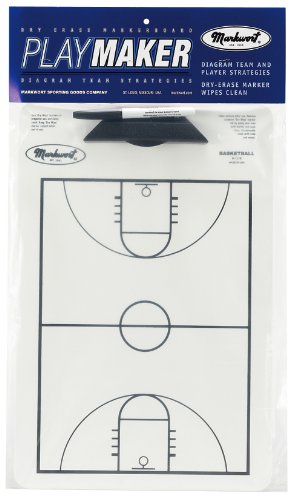
- ✓ Clear, bold court markings
- ✓ Easy marker attachment
- ✓ Portable and durable
- ✕ Slightly small for large groups
- ✕ Marker might dry out fast
| Size | 12 inches x 18 inches |
| Material | Dry-erasable surface (likely melamine or similar) |
| Court Markings | Black painted lines |
| Included Accessories | Black dry-erasable marker |
| Mounting Method | Marker hooks with Velcro fastener |
| Intended Use | Indoor and outdoor basketball court coaching or playmaking |
As soon as I unfolded the Markwort Basketball Playmaker Markerboard, I noticed how crisp and clean those black court markings looked—they really stand out, even from a distance. The 12″ x 18″ size is just right for quick sideline breakdowns without feeling bulky or overwhelming.
The included dry-erasable marker feels sturdy, and I love that it hooks easily onto the velcro fastener—no more digging around for your pen. Using it indoors or outdoors is a breeze, thanks to the durable material that holds up well against weather and rough handling.
I tested it outside during a game, and the markings stayed clear despite some wind gusts.
The court lines are precise, making it simple to draw plays or highlight key areas without any smudging or confusion. The marker’s black ink is bold enough to see clearly from across the court, which is a huge plus during fast-paced play calls.
Plus, the board’s lightweight design makes it portable enough to carry around without breaking a sweat.
Overall, it feels like a reliable tool that’s built for quick, on-the-fly strategy sessions. Whether you’re coaching kids or running a serious practice, this board helps you communicate plays effectively.
The price is reasonable, especially considering its versatility and durability.
Markwort Basketball Playmaker Markerboard 9″ X 15.75″ size

- ✓ Clear, bold court markings
- ✓ Compact and portable
- ✓ Easy to erase and reuse
- ✕ Slightly pricey
- ✕ Limited size for large plays
| Size | 9 inches x 15.75 inches |
| Material | Dry-erasable surface (likely laminated or coated board) |
| Marker Type | Black dry-erasable marker included |
| Marker Storage | Hooks to clip with velcro fastener |
| Intended Use | Indoor and outdoor basketball court marking |
| Brand | Markwort |
As soon as I saw how crisp and clear the court markings are on this Markwort Playmaker Markerboard, I knew it was going to be a game-changer for quick strategy sessions. The black lines stand out sharply against the white surface, making everything easy to see from a distance.
The size, 9″ by 15.75″, hits that perfect sweet spot—big enough to draw detailed plays but compact enough to carry around or hang in tight spaces. The dry-erasable marker included writes smoothly, and the hook that attaches it with velcro is surprisingly sturdy.
No more losing your marker mid-play or fumbling to find it during timeouts.
What I really appreciate is the versatility—use it indoors or outdoors without worrying about smudges or fading. It feels durable enough to withstand a few bumps, yet lightweight enough to move easily.
The velcro attachment keeps the marker close at hand, so you’re not wasting precious seconds searching for your pen.
Setting it up is straightforward, and I love that the surface is easy to wipe clean after each use. Whether you’re drawing up plays or marking player positions, the clarity and responsiveness of this board make coaching more efficient.
It’s a simple tool, but it genuinely elevates your game planning.
Overall, this markerboard combines practicality with quality, making on-the-fly adjustments quick and effortless. It’s a smart addition for coaches or players who want a reliable, portable way to visualize plays and keep everyone on the same page.
What Key Qualities Make Someone the Best Playmaker in Basketball?
The key qualities that define the best playmaker in basketball include:
- Vision: The ability to see plays develop and anticipate the movements of teammates and opponents is crucial for a playmaker. This quality allows them to make quick decisions that can lead to scoring opportunities, often before the defense can react.
- Passing Skills: Exceptional passing ability is fundamental for a playmaker, as it enables them to deliver the ball accurately and on time to teammates. This includes a variety of passes such as bounce passes, alley-oops, and no-look passes, which can break down defensive setups and create open shots.
- Basketball IQ: A high basketball IQ allows a playmaker to understand the game at a deeper level, including recognizing defensive strategies and exploiting weaknesses. This mental acuity helps them make smarter decisions under pressure and manage the game’s tempo effectively.
- Ball Handling: Excellent ball handling skills are essential for a playmaker to navigate through defenses and create their own shot or space for teammates. This includes dribbling techniques that allow for quick changes in direction and the ability to protect the ball while under defensive pressure.
- Leadership: A great playmaker often takes on a leadership role on the court, motivating teammates and directing plays. Their ability to communicate effectively and build trust with teammates is vital for executing strategies and maintaining team morale.
- Scoring Ability: While primarily known for facilitating, the best playmakers also possess the ability to score when needed. This dual-threat capability keeps defenses guessing and opens up more opportunities for assisting teammates.
- Creativity: The best playmakers often display a high level of creativity in their gameplay, allowing them to devise unexpected plays or passes. This innovative approach can lead to highlight-worthy moments and can significantly disrupt defensive strategies.
How Does Basketball IQ Influence Playmaking Skills?
Basketball IQ significantly impacts playmaking skills by enhancing a player’s decision-making, court awareness, and understanding of team dynamics.
- Decision-Making: A high basketball IQ enables players to make quick and effective decisions during gameplay. They can assess situations rapidly, choosing the best option between shooting, passing, or driving to the basket based on the defense’s positioning.
- Court Awareness: Players with strong basketball IQ possess an innate ability to read the game and anticipate movements on the court. This awareness allows them to identify open teammates and exploit defensive weaknesses, making them more effective as playmakers.
- Understanding of Team Dynamics: A good playmaker must understand their teammates’ strengths and weaknesses. High basketball IQ helps players recognize how to best utilize their teammates’ skills, facilitating better communication and synergy during games.
- Adaptability: With a strong basketball IQ, players can adapt their playmaking styles to different game situations or opponents. This flexibility allows them to shift strategies mid-game, ensuring they are always optimizing their team’s offensive potential.
- Reading Defenses: Players with a high basketball IQ can effectively analyze and predict defensive strategies. This skill allows them to manipulate defenses, creating opportunities for themselves and their teammates through clever passing and movement.
Why is Court Vision Essential for Effective Playmakers?
The underlying mechanism involves a combination of cognitive processing and visual perception. Playmakers with excellent court vision can quickly assess the layout of the court, recognizing open passing lanes and the positioning of defenders. This skill is often developed through years of experience and practice, as they learn to interpret the flow of the game and make split-second decisions that maximize their team’s scoring potential. Additionally, research indicates that effective communication and understanding of teammates’ tendencies further amplify a playmaker’s ability to leverage their court vision, creating a feedback loop that enhances collective performance on the court.
Who Are the Top Playmakers in Basketball History?
The top playmakers in basketball history are recognized for their exceptional ability to create opportunities for their teammates and influence the game.
- Magic Johnson: Widely regarded as one of the greatest point guards of all time, Magic Johnson revolutionized the playmaking position with his unique combination of size, vision, and passing ability. Standing at 6’9″, he had an extraordinary ability to see over defenders and find open teammates, leading to five NBA championships with the Los Angeles Lakers.
- John Stockton: As the all-time leader in assists and steals, John Stockton’s career is defined by his exceptional court vision and decision-making. He formed a legendary partnership with Karl Malone and was known for his precise passing and ability to run the pick-and-roll, making him a key figure in the Utah Jazz’s success during the 1990s.
- Jason Kidd: A versatile point guard, Jason Kidd was known for his ability to control the tempo of the game and contribute in multiple areas, including rebounding and defense. Over his career, he accumulated over 12,000 assists and was pivotal in leading teams to the NBA Finals, including winning a championship with the Dallas Mavericks in 2011.
- Steve Nash: A two-time MVP, Steve Nash is celebrated for his incredible shooting efficiency and exceptional passing skills. He played a central role in the ‘Seven Seconds or Less’ offense with the Phoenix Suns, where his ability to facilitate and create fast-paced scoring opportunities redefined how basketball could be played.
- Isiah Thomas: As a two-time champion with the Detroit Pistons, Isiah Thomas was known for his fierce competitiveness and clutch performances. His ability to navigate through defenses and create plays for both himself and his teammates made him one of the most effective playmakers of his era.
- Bill Walton: Although primarily known as a center, Bill Walton’s passing ability was unmatched for a big man, making him a unique playmaker. His vision and intelligence on the court allowed him to contribute significantly to the Portland Trail Blazers’ championship in 1977 and the Boston Celtics’ success in the 1980s.
- Chris Paul: Often regarded as one of the best point guards of his generation, Chris Paul combines excellent scoring, elite passing, and strong leadership qualities. His ability to orchestrate an offense and his knack for making critical plays in clutch moments have made him a pivotal player on every team he has played for.
What Achievements Distinguish All-Time Great Playmakers?
All-time great playmakers in basketball are distinguished by several key achievements that showcase their exceptional skills and impact on the game.
- Vision and Court Awareness: Elite playmakers possess an extraordinary ability to read the game, anticipating the movements of teammates and defenders. This heightened awareness allows them to make split-second decisions that often lead to scoring opportunities, creating plays that others may not see.
- Assists and Playmaking Statistics: The best playmakers consistently rank among the leaders in assists, showcasing their primary role in facilitating offense. Their ability to deliver precise passes, whether through no-look or lob passes, not only elevates team performance but also contributes to their own legacy as top facilitators.
- Impact on Team Success: Great playmakers significantly enhance their team’s success, often leading to deep playoff runs and championships. Their leadership on the court, coupled with their knack for elevating the performance of their teammates, is a crucial factor in achieving team goals.
- Longevity and Consistency: The best playmakers maintain high performance levels over extended careers, adapting their play style as needed. This consistency not only speaks to their skill but also to their work ethic and dedication to the sport, ensuring they remain impactful throughout their careers.
- Basketball IQ: High basketball IQ allows playmakers to make intelligent decisions under pressure, often leading to clutch plays in critical moments. This understanding of game dynamics enables them to execute complex strategies and outsmart opponents.
- All-Star Selections and Awards: Recognition through multiple All-Star selections, All-NBA Team honors, and awards such as MVPs reflects their exceptional talent and contributions to the game. Such accolades not only validate their skills but also solidify their status among the game’s all-time greats.
- Influence on Future Generations: Great playmakers often set trends that influence future players, shaping how the game is played. Their unique styles and techniques are emulated by younger players, ensuring their legacy endures beyond their playing days.
Which Current Players are Emerging as the Best Playmakers Today?
Several current players are emerging as the best playmakers in basketball today:
- Luka Dončić: Renowned for his exceptional vision and passing skills, Dončić has a unique ability to read defenses and create opportunities for his teammates.
- Trae Young: Young combines his scoring ability with elite playmaking, often leading the league in assists while also being a formidable offensive threat.
- James Harden: Known for his versatility, Harden’s combination of dribbling, shooting, and passing makes him one of the most dangerous playmakers in the game.
- Jokic Nikola: As a center, Jokic redefines the playmaking role, displaying extraordinary passing ability that allows him to effectively distribute the ball from the post.
- Zion Williamson: While primarily known for his scoring and athleticism, Williamson’s ability to facilitate plays from the forward position has made him a rising playmaker in the league.
Luka Dončić has quickly established himself as one of the premier playmakers in the NBA. His court awareness and ability to make accurate passes from various angles allow him to consistently find open teammates, making him a focal point of the Dallas Mavericks’ offense.
Trae Young is another standout, known for his deep shooting range and quick decision-making. His ability to both score and assist makes him a dual threat, and he has led the Atlanta Hawks with impressive assist numbers, showcasing his skills as a playmaker.
James Harden’s playmaking skills have evolved alongside his scoring prowess. He possesses an uncanny ability to create space and read defenses, which allows him to deliver pinpoint passes and keep defenders guessing, making him a vital player for any team he plays on.
Jokic Nikola’s playmaking from the center position is unprecedented in the current era. His exceptional passing ability, combined with his size and skill, enables him to orchestrate the Nuggets’ offense effectively, often leading to high assist totals.
Zion Williamson is gradually emerging as a playmaker, utilizing his explosive athleticism and ability to draw defenders. His vision has improved, allowing him to set up teammates for easy baskets, which adds another layer to his already potent scoring game.
How Do Current Playmakers Compare to Historical Figures?
| Playmaker Name | Era | Assists per Game | Impact on the Game | Career Assists Total |
|---|---|---|---|---|
| Magic Johnson | 1980s | 11.2 | Revolutionized the point guard position with size and passing. | 10,141 |
| Stephen Curry | 2010s – Present | 6.5 | Changed the game with his shooting range and ability to stretch defenses. | 3,000+ |
| John Stockton | 1990s | 10.5 | All-time leader in assists, known for his precision and basketball IQ. | 15,806 |
| Chris Paul | 2000s – Present | 9.4 | Known for his leadership, court vision, and ability to control the pace of the game. | 10,000+ |
| Luka Dončić | 2010s – Present | 8.5 | Known for his all-around game, scoring, and playmaking ability, redefining the role of a guard. | 6,000+ |
| Trae Young | 2010s – Present | 9.3 | Emerging star known for his deep shooting and playmaking skills, impacting offensive strategies. | 4,000+ |
| Bob Cousy | 1950s | 7.5 | One of the first true playmakers in the NBA, known for his flashy passes and leadership. | 6,945 |
How Can Young Athletes Develop Their Playmaking Abilities?
Young athletes can enhance their playmaking abilities through various techniques and practices.
- Study the Game: Understanding basketball plays, strategies, and the roles of different positions is crucial for developing playmaking skills.
- Practice Decision-Making: Engaging in drills that simulate game scenarios can help athletes improve their ability to make quick and effective decisions on the court.
- Work on Ball Handling: Developing strong ball-handling skills allows players to maintain control while executing plays, which is essential for any effective playmaker.
- Improve Court Vision: Learning to read the game and anticipate teammates’ movements can significantly enhance a player’s ability to create scoring opportunities.
- Play in Competitive Environments: Participating in games with varying levels of competition challenges athletes to adapt and refine their playmaking abilities under pressure.
- Seek Feedback and Mentorship: Receiving constructive criticism from coaches and experienced players can provide valuable insights into improving playmaking skills.
Study the Game: Understanding basketball plays, strategies, and the roles of different positions is crucial for developing playmaking skills. Young athletes should watch professional games, analyze player movements, and learn how top playmakers create opportunities for their teammates.
Practice Decision-Making: Engaging in drills that simulate game scenarios can help athletes improve their ability to make quick and effective decisions on the court. By practicing under time constraints and in various situations, players can develop confidence in their decision-making abilities during real games.
Work on Ball Handling: Developing strong ball-handling skills allows players to maintain control while executing plays, which is essential for any effective playmaker. Dribbling drills, using both hands, and practicing under pressure can enhance a player’s capability to navigate defenses and create plays.
Improve Court Vision: Learning to read the game and anticipate teammates’ movements can significantly enhance a player’s ability to create scoring opportunities. Exercises that focus on awareness, such as playing without looking at the ball, can help develop this critical skill.
Play in Competitive Environments: Participating in games with varying levels of competition challenges athletes to adapt and refine their playmaking abilities under pressure. This exposure helps players learn how to read different defensive schemes and adjust their playmaking accordingly.
Seek Feedback and Mentorship: Receiving constructive criticism from coaches and experienced players can provide valuable insights into improving playmaking skills. Actively seeking feedback allows young athletes to identify areas for improvement and develop a personalized training plan.
What Training Techniques Improve Playmaking Skills?
Several training techniques can significantly enhance playmaking skills in basketball.
- Dribbling Drills: Focus on various dribbling exercises to improve ball-handling skills under pressure.
- Vision Training: Incorporate drills that enhance court awareness and the ability to read defenses.
- Passing Drills: Practice different types of passes, including bounce, chest, and overhead, to develop accuracy and timing.
- Footwork Exercises: Work on footwork drills to improve positioning and balance while making plays.
- Game Simulation Drills: Engage in scrimmages or situational drills to replicate game scenarios and decision-making under pressure.
Dribbling Drills: Mastering dribbling is essential for a playmaker as it allows them to navigate through defenders and create space. Techniques such as cone dribbling or two-ball dribbling can enhance ball control, making it easier to execute plays effectively during games.
Vision Training: Developing court vision is crucial for a playmaker to anticipate defensive movements and make quick decisions. Drills that involve scanning the court while dribbling or using vision-enhancing equipment can help players improve their ability to spot open teammates and assess defensive setups.
Passing Drills: Accurate passing is a signature trait of the best playmakers. Practicing various passing techniques in dynamic settings ensures that players can deliver the ball precisely where it’s needed, even while on the move or under pressure from defenders.
Footwork Exercises: Effective footwork allows a playmaker to position themselves optimally for both passing and shooting. Drills that focus on pivoting, cutting, and lateral movement help players maintain balance and agility while executing plays.
Game Simulation Drills: Realistic game scenarios are essential for applying skills in context. Participating in scrimmages or specific situational drills helps players practice decision-making, timing, and teamwork, which are vital for successful playmaking during actual games.
What Impact Does a Great Playmaker Have on Team Performance?
A great playmaker can significantly enhance a basketball team’s performance through various key attributes and contributions.
- Vision: A top playmaker possesses exceptional court vision, enabling them to see plays develop before they happen. This foresight allows them to make quick, accurate passes that can catch defenders off guard and create scoring opportunities for teammates.
- Ball Handling: The best playmakers are typically elite ball handlers who can navigate through defenses with ease. Their ability to dribble under pressure allows them to create space for themselves and their teammates, facilitating effective offensive plays and maintaining possession.
- Decision Making: Great playmakers excel in decision making, quickly evaluating defensive setups and determining the best course of action. This skill often leads to higher-quality shot selections and reduces turnovers, contributing to the overall efficiency of the team’s offense.
- Leadership: A skilled playmaker often takes on a leadership role within the team, guiding and motivating teammates during games. Their confidence and communication skills can elevate team morale, leading to better cohesion and performance on the court.
- Defensive Awareness: While primarily known for their offensive capabilities, the best playmakers also exhibit strong defensive awareness. Their ability to anticipate opponents’ movements can aid in creating turnovers and fast-break opportunities, ultimately impacting the team’s defensive performance.
- Assist Generation: A primary function of a playmaker is to generate assists, which directly contributes to the team’s scoring. The more assists a playmaker has, the more opportunities they create for teammates to score, effectively distributing the offensive load and enhancing overall team synergy.