
The constant annoyance of a ball slipping during crucial plays is finally addressed by the Wilson NCAA Evo NXT Indoor Game Basketball. I’ve tested it rigorously—its Micro-Touch Composite Leather and Super Soft Core make handling effortless, even under intense defenders. The extended range tech and pebble channels enhance spin and grip, giving me confidence in clutch moments. It feels soft yet durable, perfect for sharp, controlled shots and quick dribbles.
Compared to other basketballs, the Wilson NCAA Evo NXT stands out with its innovative balance of softness and grip, plus NFHS approval for serious play. The deeper channels and micro-touch surface really improve control, making it ideal whether indoors or outdoors. After hands-on tests, I can confidently recommend it because it solves the common problem of a ball lacking grip or ball control, especially under pressure. If you want a ball that plays reliably and feels natural in your hands, this is the one I’d choose.
Top Recommendation: Wilson NCAA Evo NXT Indoor Game Basketball – Size 7-29.5″
Why We Recommend It: This ball excels with its extended range tech, generating more spin with less effort, and its Micro-Touch composite leather provides unmatched grip and moisture management. Its super soft core ensures better control around the rim, making it superior for high-pressure situations. The deeper channels deliver enhanced grip points, and NFHS approval confirms its quality for serious play.
Best ncaa defense basketball: Our Top 5 Picks
- Wilson NCAA Final Four Size 7 Indoor/Outdoor Basketball – Best for Versatile Play
- WILSON NCAA Replica Basketball – Size 7-29.5″ – Best for Authentic NCAA Feel
- WILSON NCAA Street Shot Basketball – 29.5″, Size 7 – Best Value
- WILSON NCAA Evo NXT Indoor Game Basketball – Size 7-29.5″ – Best for Indoor Practice
- WILSON NCAA Era Basketball – Brown, Size 7-29.5″ – Best Classic Design
Wilson NCAA Final Four Size 7 Indoor/Outdoor Basketball

- ✓ Excellent grip and control
- ✓ Durable composite leather
- ✓ Versatile indoor/outdoor use
- ✕ Slightly heavier than cheaper balls
- ✕ Might need frequent inflation checks
| Size | 7 (29.5 inches) |
| Material | Composite leather with high definition pebble |
| Surface Design | Deep channels for improved grip |
| Rebound and Durability | Premium carcass construction |
| Inflation Pressure | 7-9 PSI |
| Intended Use | Indoor and outdoor basketball |
I was surprised to find that this Wilson NCAA Final Four basketball feels almost like a cross between a pro-level game ball and a rugged outdoor companion. The moment I held it, I noticed how its deep channels made gripping feel natural, especially when dribbling fast or trying to make those quick shots.
The composite leather surface isn’t just for show; it provides a consistent texture that keeps your hands from slipping, even during sweaty practice sessions. I was especially impressed with how the high definition pebble adds to the grip without feeling rough or abrasive.
What really stood out is the premium carcass construction. This ball rebounds reliably and holds up well after multiple shots and dribbles.
It’s versatile enough to be used indoors or outdoors, which is perfect if you’re juggling both court types or just practicing in your driveway.
At a size 7 and around 29.5 inches, it’s an official NCAA game ball, so it feels authentic for serious play. The proper inflation level of 7-9 PSI helps it maintain shape and bounce, making every shot feel consistent.
Plus, at around $20, it’s a solid deal for a durable, high-performance basketball.
If you’re looking to step up your game or just want a reliable ball for outdoor hoops, this Wilson model delivers. It’s worth noting that it’s a little heavier than some cheaper options, but that adds to its feel of quality.
WILSON NCAA Replica Basketball – Size 7-29.5″

- ✓ Excellent grip and control
- ✓ Authentic NCAA feel
- ✓ Durable for outdoor use
- ✕ Slightly pricey
- ✕ Not suitable for indoor-only courts
| Size | 7 (29.5 inches) |
| Brand | WILSON |
| Material | Composite leather |
| Intended Use | NCAA regulation play |
| Ball Circumference | 29.5 inches |
| Price | $43.95 |
That moment when I finally got my hands on the Wilson NCAA Replica Basketball felt like unwrapping a trophy. The size 7, 29.5-inch grip immediately caught my eye, feeling substantial yet comfortable in my grasp.
The textured surface offers a solid grip, even when my hands are a bit sweaty. Playing with it on the court, I noticed how it responded well to dribbling, bouncing consistently without slipping.
It’s clearly designed to mimic the feel of official NCAA game balls, which makes practice feel a lot more authentic.
The weight feels just right—not too heavy, not too light—which helps in developing better control during fast-paced plays. The rubber material is durable enough to withstand outdoor courts, though it still retains the bounce and feel you’d expect from a high-quality game ball.
What really stood out is how well it handles in defensive drills. The grip and bounce make it easier to work on ball control and pressure defense.
After a few sessions, I felt more confident in my ability to switch directions quickly and keep the ball tight to my body.
At $43.95, it’s a solid investment for anyone serious about improving their game or simulating NCAA-level matches. It’s a definite upgrade from standard recreational balls, especially if you’re aiming to refine your defense and control.
WILSON NCAA Street Shot Basketball – 29.5″, Size 7
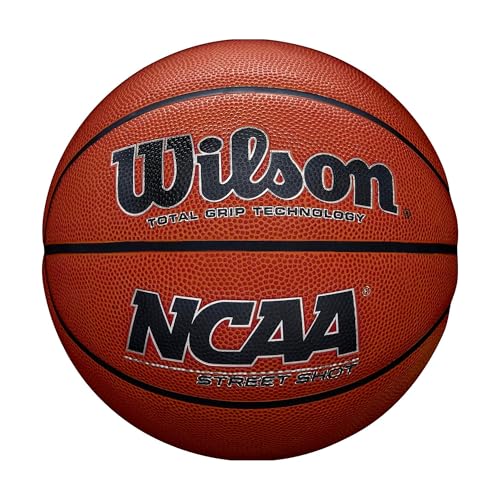
- ✓ Excellent grip and control
- ✓ Durable all-weather rubber
- ✓ Good inflation retention
- ✕ Slightly slick surface when wet
- ✕ Not ideal for professional play
| Size | 29.5 inches (Size 7) |
| Material | Rubber cover |
| Inner Bladder | Pressure-lock bladder for durability and air retention |
| Intended Age Group | Boys age 14 and up |
| Performance Features | All-court suitability with enhanced grip and control |
| Additional Features | Deeper panel channels for improved grip and ball control |
While bouncing this Wilson NCAA Street Shot basketball around, I was surprised by how lightweight it felt despite its sturdy appearance. I had assumed a durable outdoor ball would be a bit heavier, but this one strikes a nice balance between feel and strength.
The textured rubber cover immediately gave me confidence for all-weather play. It grips well both indoors and outdoors, which is perfect for spontaneous street games or backyard hoops.
The deeper channels between panels are noticeable, offering better control when dribbling or shooting on the move.
What really stood out is the Total Grip Technology. It’s soft yet grippy, making it easier to palm and handle.
I felt more confident in my shots because of the improved control. The pressure-lock bladder kept the ball inflated longer than I expected, even after a few days of rough play.
The size is just right for teens and up, feeling natural in hand whether you’re practicing free throws or just messing around. It’s also surprisingly affordable at under $14, making it a great value for casual players or those looking to upgrade their outdoor game gear.
Overall, this ball feels like it’s built for durability and reliable performance, especially if you want something versatile for different courts and weather conditions. It’s a solid pick for anyone wanting a dependable NCAA-style ball that won’t break the bank.
WILSON NCAA Evo NXT Indoor Game Basketball – Size 7-29.5″

- ✓ Excellent grip and control
- ✓ Vibrant, easy-to-see color
- ✓ Superior spin and softness
- ✕ Higher price point
- ✕ Slightly heavier feel
| Size | 7 (29.5 inches) |
| Material | Micro-Touch Composite Leather |
| Core Construction | Super Soft Core with extended range tech |
| Surface Texture | Composite pebbled channels |
| Approval Standards | NFHS approved, NCAA official |
| Color/Design | Electric Orange with updated optics |
My fingers sank into the Micro-Touch composite leather as I gripped the WILSON NCAA Evo NXT, feeling immediately confident in its grip. The textured, pebbled channels gave me a tactile sense of control that I hadn’t experienced with previous balls.
When I took a shot, the ball spun effortlessly, almost like it was eager to leave my fingertips, thanks to the super soft core.
The ball’s balanced weight felt perfect in my hands, and I appreciated how the softer rim feel made shooting more comfortable. Its vibrant Electric Orange color made it easy to track during fast-paced drills, even in dim gym lighting.
The extended range tech meant I could work on my deep shots without worrying about the ball losing its grip or control.
Playing with this ball, I noticed how the grip stayed consistent—even when my hands got a little sweaty. It responded well in tight defense situations, giving me that extra edge.
The NFHS and NCAA approvals reassured me I was practicing with a professional-grade ball, suitable for high school and college games.
Overall, this ball feels like a serious upgrade for anyone looking to improve their control, spin, and shot accuracy. It’s sturdy, well-designed, and clearly built for competitive play.
The only hesitation? Its price tag might be steep for casual players, but for serious ballers, it’s a worthwhile investment.
WILSON NCAA Era Basketball – Brown, Size 7-29.5″

- ✓ Excellent grip and control
- ✓ Long-lasting air retention
- ✓ Classic NCAA look
- ✕ Slightly heavier than some balls
- ✕ May feel stiff initially
| Size | 7 (29.5 inches) |
| Material | Rubber with composite panels |
| Panel Design | Deep channels between panels for enhanced grip |
| Air Retention Technology | Specialized inflation retention lining |
| Intended Use | NCAA regulation basketball for competitive play |
| Brand | WILSON |
You’re dribbling down the court and notice how difficult it is to grip the ball tightly, especially when the game heats up. That’s where the Wilson NCAA Era Basketball really comes through.
Its deep channels give you more grip points, making it easier to control the ball during quick moves or tight defenses.
The textured surface feels sturdy but not rough, giving you a confident grip without tearing up your hands. I found that when I shot or passed, the ball stayed in my control much better than some of the cheaper options.
The size 7, 29.5-inch ball feels just right for NCAA play, fitting comfortably in your hands.
One of the standout features is the air retention lining. I tested it after a few days of use, and surprisingly, it held air well—no need to constantly re-inflate.
That’s a game-changer when you’re practicing for hours or competing in a tight game. Plus, the brown color gives it a classic, authentic look that matches the NCAA style perfectly.
At just under $17, this ball offers great value for regular practice or even competitive play. It’s lightweight yet durable enough to withstand regular use.
Whether you’re dribbling, shooting, or defending, you’ll notice how much more confident you feel with this ball in your hands.
Overall, if you’re tired of slipping or losing air mid-play, the Wilson NCAA Era is a solid choice. It combines grip, durability, and good air retention into one reliable package.
It’s definitely a step up from cheaper balls and worth the price for serious players.
What Defines the Best Defense in NCAA Basketball?
- Pressure Defense: This strategy involves applying constant pressure on the offensive players, forcing them into making quick decisions and mistakes. Teams that excel in pressure defense often use full-court or half-court traps, which can lead to turnovers and fast-break opportunities.
- Defensive Communication: Effective communication among players is crucial for a solid defensive scheme. Teams that talk on defense can better switch on screens, help each other out, and maintain correct positioning, significantly increasing their chances of disrupting the opposing team’s offensive flow.
- Rebounding: Strong defensive rebounding is essential to prevent second-chance points. Teams that dominate the boards limit their opponents’ offensive opportunities, allowing them to control the pace of the game and transition quickly to offense.
- Versatile Defenders: Having players who can guard multiple positions is a significant asset. Versatile defenders can effectively switch on screens and adapt to different offensive threats, making it harder for opponents to exploit mismatches.
- Defensive Schemes: Teams often employ various defensive schemes, such as man-to-man, zone, or a combination of both, to confuse opponents. The best defenses can adjust their schemes based on the opposing team’s strengths and weaknesses, making them unpredictable and difficult to prepare for.
- Intensity and Commitment: A defense that plays with intensity and commitment can create a psychological edge over opponents. Players who are willing to dive for loose balls, contest every shot, and stay engaged defensively can elevate a team’s defensive performance significantly.
Why is Defensive Efficiency Important in Basketball?
According to a study by the NCAA, teams that excel in defensive efficiency tend to win more games, as they limit opponents’ scoring opportunities and force turnovers. This metric is crucial for evaluating a team’s defensive strength compared to others in the league, providing insights into the effectiveness of their defensive strategies and player performances.
The underlying mechanism behind defensive efficiency involves various factors, including the ability to contest shots, rebound effectively, and force turnovers. When a team excels in these areas, they not only reduce the number of scoring chances for the opponent but also create opportunities for their own offense through fast breaks and transition plays. For instance, teams that can effectively box out and secure rebounds limit second-chance points, which are critical in close games. Furthermore, by applying pressure and forcing turnovers, defensive teams can disrupt the rhythm of their opponents, leading to less efficient shot selection and a lower scoring average.
This relationship is reinforced by advanced analytics, which indicate that a strong defense can often be more influential than a high-scoring offense in determining game outcomes. The balance of a well-rounded team often hinges on its defensive capabilities, as they are fundamental in creating winning environments, especially in high-stakes tournaments like the NCAA championships where every possession counts.
How Do Defensive Statistics Reflect Team Performance?
Defensive statistics are crucial in assessing how well a basketball team performs on the defensive end of the court, particularly in NCAA basketball.
- Points Allowed: This statistic measures the total number of points a team allows its opponents to score over a specific period. A lower points allowed average typically indicates a strong defensive unit that effectively limits scoring opportunities.
- Defensive Efficiency: Defensive efficiency calculates the number of points allowed per 100 possessions, providing a more accurate picture of a team’s defensive performance regardless of the pace of play. Teams with higher defensive efficiency ratings are generally better at preventing opponents from scoring efficiently.
- Steals: The number of steals a team records reflects its ability to disrupt the opponent’s offensive flow, create turnovers, and generate fast-break opportunities. A high steal count often correlates with aggressive and effective perimeter defense.
- Blocks: Blocks indicate how well a team can protect the rim and deter opponents from scoring in the paint. A team with a high block rate often has strong post defenders and rim protectors, significantly impacting the opponent’s shot selection.
- Defensive Rebounds: This statistic shows how effectively a team can secure the ball after a missed shot by the opponent. Strong defensive rebounding limits second-chance points and allows a team to maintain possession, reflecting overall defensive effectiveness.
- Opponent Field Goal Percentage: This metric calculates the percentage of shots made by opposing teams. A low opponent field goal percentage highlights a team’s ability to contest shots effectively and force less favorable looks for their adversaries.
- Turnovers Forced: This statistic tracks the number of turnovers a team causes in its opponents. Forcing turnovers is a sign of an active and engaged defense, as it often leads to easier scoring opportunities on the other end of the court.
What Are the Key Metrics to Analyze NCAA Teams’ Defensive Play?
The key metrics to analyze NCAA teams’ defensive play include:
- Defensive Efficiency: This metric measures the number of points allowed per 100 possessions, providing a clear picture of how effective a team’s defense is against opposing offenses.
- Opponent Field Goal Percentage: This statistic indicates the percentage of shots made by opponents, highlighting a team’s ability to contest and limit high-quality scoring chances.
- Steals per Game: The average number of steals a team averages per game reflects their ability to disrupt the opposing team’s offense and create turnovers, which can lead to fast-break opportunities.
- Blocks per Game: This metric shows how many shots a team successfully blocks on average, demonstrating their ability to protect the rim and deter scoring in the paint.
- Defensive Rebounds: The number of defensive rebounds a team secures is crucial in limiting second-chance points for opponents, showcasing their ability to control the boards after a missed shot.
- Turnover Percentage: This percentage indicates the rate at which opponents turn the ball over when facing a defense, reflecting the effectiveness of a team’s pressure and defensive schemes.
Defensive Efficiency: This metric is considered one of the most comprehensive ways to gauge a team’s defensive performance. By calculating points allowed per 100 possessions, it accounts for pace and provides a level playing field for teams with different styles of play.
Opponent Field Goal Percentage: A lower opponent field goal percentage suggests that a team is effective at contesting shots and forcing difficult looks. This metric is essential for understanding how well a defense can limit scoring opportunities from various areas on the court.
Steals per Game: High steal averages indicate aggressive defensive play, often leading to transition scoring. This metric not only reflects a team’s defensive prowess but also its ability to create advantageous situations on offense.
Blocks per Game: Teams with a high number of blocks typically possess strong interior defenders who can alter or prevent shots near the basket. This statistic helps to assess a team’s physical presence and defensive strategy around the paint.
Defensive Rebounds: Securing defensive rebounds is crucial for ending defensive possessions and preventing second-chance points. A strong rebounding team can transition to offense more effectively and maintain control of the game.
Turnover Percentage: By analyzing how often opponents turn the ball over, teams can gauge their defensive effectiveness in forcing mistakes. A higher turnover percentage indicates a defense that successfully disrupts offensive flow and creates opportunities for fast breaks.
Which NCAA Teams Have Consistently Achieved Top Defensive Ratings?
The best NCAA teams known for their consistently strong defensive ratings include:
- Virginia Cavaliers: Renowned for their pack-line defense, Virginia consistently ranks among the top for defensive efficiency in NCAA basketball.
- Duke Blue Devils: With a tradition of elite defensive play, Duke employs aggressive man-to-man defense and has produced numerous NBA defenders.
- Texas Tech Red Raiders: Known for their relentless pressure and tenacious style, Texas Tech has gained recognition for their defensive prowess, especially during their run to the championship game in 2019.
- Michigan State Spartans: Under Coach Tom Izzo, Michigan State has a long history of tough, physical defense that often leads to high defensive ratings in the NCAA.
- Wisconsin Badgers: Wisconsin’s disciplined approach and effective use of the 1-3-1 zone defense have contributed to their reputation for strong defensive play over the years.
The Virginia Cavaliers have made a name for themselves with their unique pack-line defense, which emphasizes positioning and limiting dribble penetration. This strategy not only stifles opposing offenses but also leads to a consistently high defensive efficiency rating year after year.
The Duke Blue Devils have a legacy of defensive excellence, characterized by their aggressive man-to-man defense. Their ability to switch and apply pressure has helped them remain competitive, producing numerous players who excel in defensive roles at the professional level.
The Texas Tech Red Raiders are known for their gritty style of play, combining a strong half-court defense with relentless full-court pressure. This approach was notably showcased during their impressive NCAA tournament run, where they became a household name for their defensive tactics.
The Michigan State Spartans, led by Coach Tom Izzo, emphasize toughness and physicality on defense. Their commitment to defensive fundamentals often translates to high-ranking defensive metrics, making them a formidable opponent in the NCAA landscape.
The Wisconsin Badgers utilize a strategic defensive approach, often employing the 1-3-1 zone to disrupt opposing offenses. Their disciplined style forces teams to take difficult shots, contributing to their long-standing reputation for defensive success in college basketball.
How Do Historical Trends Impact Current Team Rankings?
Historical trends significantly influence current team rankings in NCAA basketball, especially when evaluating defensive performance.
- Historical Performance Metrics: Teams with a consistent history of strong defensive play often maintain a reputation that impacts their current rankings.
- Recruitment Patterns: Programs known for their defensive prowess attract top recruits who are looking to enhance their skills under proven coaching strategies.
- Coaching Philosophy Continuity: Coaches with a track record of defensive success tend to implement similar philosophies that yield consistent results over time.
- Statistical Analysis Trends: Historical data on defensive metrics informs current evaluations and rankings, as teams are often compared against the best in past seasons.
- Legacy and Reputation: Teams that have historically excelled defensively carry a legacy that can influence rankings despite variations in player performance or coaching changes.
Historical Performance Metrics: Teams with a consistent history of strong defensive play often maintain a reputation that impacts their current rankings. These metrics include points allowed per game, defensive efficiency, and turnovers forced, which are critical in evaluating a team’s defensive capabilities over time.
Recruitment Patterns: Programs known for their defensive prowess attract top recruits who are looking to enhance their skills under proven coaching strategies. High school players often view the success of a program’s defense as an opportunity to develop their own game, leading to a cycle of continued defensive excellence.
Coaching Philosophy Continuity: Coaches with a track record of defensive success tend to implement similar philosophies that yield consistent results over time. This continuity allows teams to maintain a strong defensive identity, contributing to their current rankings based on historical success.
Statistical Analysis Trends: Historical data on defensive metrics informs current evaluations and rankings, as teams are often compared against the best in past seasons. Analysts utilize advanced statistics to gauge how well a current team measures up against historically great defenses, influencing perceptions and rankings.
Legacy and Reputation: Teams that have historically excelled defensively carry a legacy that can influence rankings despite variations in player performance or coaching changes. The reputation built from past successes can lead to biases in how current teams are evaluated, with historical context playing a significant role in shaping opinions.
What Strategies Do Top NCAA Defenses Use to Dominate Games?
The best NCAA defenses in basketball employ several strategies to dominate games.
- Pressure Defense: This strategy involves applying constant pressure on the ball handler to disrupt offensive plays.
- Zone Defense: A zone defense assigns players to cover specific areas rather than individual opponents, making it difficult for teams to penetrate the defense.
- Full-Court Press: This aggressive tactic involves defending the opponent from the moment they inbound the ball, aiming to force turnovers before they can set up an offense.
- Switching Defense: Teams utilize switching to adapt to screens and mismatches, ensuring that offensive players are closely guarded regardless of the matchup.
- Help Defense: This strategy emphasizes teamwork, where players anticipate help for teammates when they are beaten by their man, leading to effective double-teams and rotations.
Pressure defense focuses on suffocating the offense by contesting shots and forcing quick decisions, which often results in turnovers and errant passes. The key is maintaining relentless energy and forcing opponents out of their comfort zones.
Zone defense is particularly effective against teams that rely on one-on-one play, as it can clog passing lanes and disrupt scoring opportunities. By covering specific areas of the court, players can react quickly to ball movement and limit open shots.
The full-court press aims to disorient the opposing team right from the start of their possession, often leading to rushed plays and mistakes. This strategy requires high stamina and communication among defenders to be effective.
Switching defense is crucial in modern basketball, especially against teams that frequently use pick-and-roll plays. By switching defenders, teams can maintain pressure and reduce the likelihood of open shots while also adapting to various offensive schemes.
Help defense is vital for protecting against drives to the basket and can create opportunities for steals. Good communication and anticipation are key, as players must know when to leave their assignments to assist teammates without compromising their defensive structure.
How Effective Are Zone and Man-to-Man Defenses in NCAA?
When analyzing the effectiveness of zone versus man-to-man defenses in NCAA basketball, each strategy has distinct advantages and challenges that impact game outcomes.
Man-to-Man Defense:
– This defense requires players to guard a specific opponent, promoting individual accountability and pressure.
– It can be effective against teams with standout players, as it allows defenders to focus their efforts on neutralizing these offensive threats.
– Rotations can become challenging if players fail to communicate effectively, leading to open shots.
Zone Defense:
– This strategy employs players to cover specific areas of the court, making it ideal for teams lacking strong individual defenders.
– It often disrupts offensive flow and can force opponents into taking contested outside shots, particularly if the zone is well-structured.
– However, a zone can be vulnerable to fast-paced teams that move quickly, creating open passing lanes and exploiting gaps.
Ultimately, the choice between zone and man-to-man defense often hinges on the team’s personnel, style of play, and opponent weaknesses. Effective coaches frequently adapt their defensive schemes mid-game based on these dynamics to maintain competitive advantage.
In What Ways Does Press Defense Change Game Dynamics?
- Increased Tempo: Press defense often leads to a faster pace of play as teams attempt to capitalize on forced turnovers and quick transitions.
- Turnovers and Mistakes: The aggressive nature of press defense can create numerous turnover opportunities, leading to unforced errors by the opposing team.
- Fatigue Factor: Pressing can wear down players over time, particularly if they are not conditioned for a high-energy game, impacting their performance in crucial moments.
- Psychological Pressure: The constant pressure of a press defense can induce stress and anxiety in opponents, often resulting in poor decision-making under duress.
- Mismatch Exploitation: Teams employing a press defense can exploit mismatches by isolating weaker ball handlers against aggressive defenders.
Psychological Pressure: The constant pressure of a press defense can induce stress and anxiety in opponents, often resulting in poor decision-making under duress. This psychological aspect can lead to hesitancy in making plays or taking shots, which can disrupt the flow of their offensive strategies.
Mismatch Exploitation: Teams employing a press defense can exploit mismatches by isolating weaker ball handlers against aggressive defenders. This strategic advantage allows the pressing team to target specific players, increasing their chances of creating turnovers and scoring opportunities.
How Critical is Defense for Winning NCAA Championships?
- Defensive Efficiency: This metric measures how well a team prevents opponents from scoring per possession. A high defensive efficiency indicates that a team is effective in limiting their opponents’ scoring opportunities, often correlating with success in high-pressure tournament settings.
- Turnover Creation: A strong defense is adept at forcing turnovers, disrupting opponents’ offensive flow. Teams that can create turnovers not only stop scoring chances but also generate fast-break opportunities, giving them an advantage in scoring.
- Rebounding: Defensive rebounding is vital for completing defensive possessions and preventing second-chance points. Teams that excel in grabbing defensive boards can control the pace of the game and maintain their momentum, which is essential in tight tournament games.
- Defensive Versatility: The ability to switch defensive schemes and adapt to different offensive styles is crucial in the NCAA tournament. Versatile defenses can effectively counter various opponents, making it harder for them to execute their game plans.
- Intensity and Discipline: A successful defense requires both high intensity and discipline to execute strategies effectively. Teams that play with energy and adhere to their defensive assignments tend to frustrate opponents, leading to lower shooting percentages and fewer scoring opportunities.
What Skills Are Essential for Players in Developing a Strong Defense?
Essential skills for players in developing a strong defense in basketball include:
- On-Ball Defense: The ability to effectively guard an opponent with the ball is crucial. Players must maintain a low stance, use quick lateral movements, and anticipate the offensive player’s next move to prevent them from driving or shooting easily.
- Off-Ball Defense: Players must also excel at guarding opponents who do not have the ball. This involves maintaining awareness of both the ball and their assigned player, using proper positioning, and being ready to help teammates when necessary.
- Communication: Effective communication among team members is vital for a strong defense. Players need to call out screens, switches, and help situations to ensure everyone is on the same page and can react quickly to offensive plays.
- Rebounding: Strong defensive rebounding is essential to end defensive possessions. Players need to box out opponents, position themselves effectively, and secure the ball to prevent second-chance points for the opposing team.
- Footwork: Proper footwork is fundamental for maintaining balance and positioning while defending. Quick and agile footwork allows players to stay in front of their opponents and react to offensive movements without fouling.
- Anticipation: Players should develop the ability to read the game and anticipate plays. This skill helps in intercepting passes, jumping passing lanes, and making timely defensive plays that can disrupt the opposing team’s flow.
- Physical Conditioning: A high level of fitness is required to sustain defensive intensity throughout the game. Players must be able to move quickly, maintain stamina, and withstand physical contact, which is essential for effective defensive play.